
 Order now and receive in 1 - 3 days
()
Order now and receive in 1 - 3 days
()
Supplybunny standard delivery
available
View details
The seller issues quotations before purchase.
What is this?
available
View details
The seller issues quotations before purchase.
What is this?
available
View details
The seller issues quotations before purchase.
What is this?
Seller delivery
available
View details
Supplybunny standard delivery
available
View details
Min. packing size
1
pkt(s)
Description
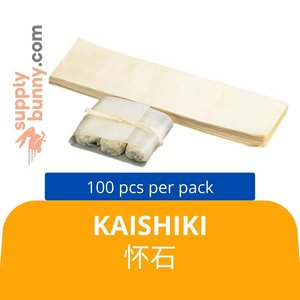
Kaishiki 100-Piece per Pack – Japanese Bincho Charcoal Presentation Leaf (懐敷/Kaishiki) for Malaysian HORECA
Kaishiki (懐敷) is a traditional Japanese decorative presentation leaf used in kaiseki (懐石) cuisine and Japanese fine dining as an elegant, food-safe presentation liner placed beneath dishes, serving plates, and food items. Sold in packs of 100 pieces (also referenced as "arang-arang bincho" in Malay, though this product is a presentation accessory), Kaishiki from Senri (M) Sdn Bhd is an essential Japanese dining presentation item for outlets seeking to replicate the meticulous visual elegance of authentic Japanese kaiseki and omakase service.
1. What is this product?
Kaishiki (懐敷) is a Japanese traditional decorative presentation accessory — typically a leaf or leaf-shaped paper/material — used beneath food items on serving plates in kaiseki and Japanese fine dining presentations. Historically made from real leaves (bamboo, camellia, or fern leaves), modern commercial kaishiki are produced from food-safe materials that maintain the traditional aesthetic. Each pack contains 100 pieces, providing an ample supply for restaurant service. They are placed between the serving vessel and the food item to add visual elegance and reinforce the authenticity of Japanese fine dining presentation.
2. What category does it belong to?
Japanese dining presentation accessories / kaiseki service supplies. Kaishiki is classified as a professional Japanese hospitality supply used in the formal Japanese dining tradition, alongside items such as Japanese lacquerware, ceramic vessels, and decorative garnishes.
3. Who is the target customer?
Kaiseki and omakase restaurants, Japanese fine dining establishments, hotel Japanese cuisine outlets, Japanese-themed event catering operations, high-end izakaya with curated food presentation standards, Japanese wedding banquet caterers, and any HORECA operator committed to authentic Japanese dining aesthetics in Malaysia.
4. What cuisine type does it suit?
Japanese kaiseki cuisine (懐石料理) — the multi-course Japanese haute cuisine format where presentation, seasonality, and visual harmony are as important as flavour. Kaishiki is also used in omakase (おまかせ) service, Japanese tea ceremony (懐石 preceding tea ceremony), sushi platter presentation, bento box luxury presentation, and any Japanese fine dining context where meticulous food presentation is a priority.
5. What is the commercial value of this product?
Kaishiki is a low-cost, high-visual-impact presentation tool that significantly elevates the perceived value of Japanese dishes. The addition of a traditional kaishiki leaf beneath a sashimi, wagashi (Japanese confectionery), or kaiseki dish transforms the presentation from adequate to exceptional, justifying premium menu pricing and enhancing the overall dining experience. At 100 pieces per pack, the cost per use is minimal while the presentation impact is substantial.
6. How is it used in a commercial kitchen?
Kaishiki is placed directly on the serving plate, board, or vessel before the food item is positioned on top. It acts as a visual and textural contrast — the green or natural-coloured leaf shape frames the food beautifully. Common applications include: beneath sashimi slices on a sashimi plate; under wagashi or Japanese sweets in a dessert course; beneath a small bowl or cup on a lacquer tray; under garnishes or condiment dishes; and as a lining in bento box compartments for luxury presentation.
7. What is a typical usage rate?
1–3 kaishiki pieces per dish presentation, depending on the dish and presentation style. For a 5-course kaiseki menu using 1–2 kaishiki per course, one pack of 100 pieces supports 25–50 full kaiseki meal presentations.
8. How many serves does one pack yield?
At 100 pieces per pack and 1–3 pieces per dish: 33–100 individual dish presentations, or 25–50 full multi-course kaiseki meal presentations (assuming 2 courses with kaishiki per meal).
9. What is the revenue potential per pack?
Kaishiki is a presentation cost, not a direct revenue-generating ingredient. However, the use of authentic Japanese presentation accessories such as kaishiki directly supports the premium pricing of kaiseki, omakase, and fine dining Japanese menus. A kaiseki meal with authentic presentation accessories commands RM 150–500+ per guest. Kaishiki at 100 pieces per pack represents an extremely low presentation cost (under RM 0.50 per piece) relative to the premium pricing it supports.
10. What is the margin example?
At an estimated pack cost of RM 15–35 (100 pieces), the per-piece cost is RM 0.15–0.35. This presentation accessory contributes zero direct food cost to the dish while supporting a premium dish pricing structure. The ROI on kaishiki is therefore extremely high — every RM 0.30 spent on kaishiki can support an additional RM 5–30 in perceived menu value and pricing power.
11. How is this product commercially positioned?
As an authentic Japanese kaiseki dining accessory that signals mastery of Japanese food culture and presentation aesthetics. Kaishiki is a marker of a kitchen that takes authentic Japanese presentation seriously — a key differentiator in Malaysia's competitive Japanese dining segment.
12. What are the outlet benefits?
Simple to use — no preparation required. Pre-cut or pre-formed pieces can be applied directly to plates in seconds. Elevates presentation quality without requiring skilled plating labour. Adds seasonal and traditional Japanese visual language to dishes. Highly photogenic — ideal for social media marketing where visual presentation drives customer acquisition.
13. How does it contribute to menu profitability?
As a presentation investment, kaishiki supports premium menu pricing across the entire kaiseki or omakase menu by elevating perceived value. Restaurants with superior presentation can command higher per-head spend, higher return visit rates, and stronger social media-driven customer acquisition — all of which drive profitability without increasing direct food costs significantly.
14. What are the storage requirements?
Store in a cool, dry place away from moisture and direct sunlight. Paper or plant-based kaishiki should be kept away from humidity which can cause discolouration or deterioration. Keep in original packaging until use.
15. What is the shelf life?
Typically 12–24 months in sealed packaging when stored in a cool, dry environment. Check the best-before or production date on the pack upon receipt.
16. What happens after opening?
Once the pack is opened, keep remaining pieces in a sealed bag or airtight container in a cool, dry place. Use within the recommended period to ensure the pieces retain their colour, shape, and food-safe integrity.
17. What are the handling risks?
Ensure kaishiki is food-safe and suitable for direct food contact before use — confirm material specifications with Senri (M) Sdn Bhd. Do not use damaged, discoloured, or deteriorated pieces for food presentation. Handle with clean, dry hands to avoid transferring moisture or oils to the presentation piece.
18. What is the origin of this product?
Traditional Japanese presentation accessory produced in Japan for the professional hospitality and food service market. Imported and distributed in Malaysia by Senri (M) Sdn Bhd.
19. What is the halal certification status?
As a non-food presentation accessory, halal certification of the kaishiki itself is not typically required. However, buyers should confirm with Senri (M) Sdn Bhd that the material is food-safe and free from any substances that could contaminate halal food with which it comes into direct contact.
20. What allergens are present?
As a presentation accessory, kaishiki does not contain food allergens. However, confirm material composition with Senri (M) Sdn Bhd if there are any concerns about the food-contact material for guests with specific sensitivities.
21. What is the minimum order quantity (MOQ)?
Please confirm MOQ directly with Senri (M) Sdn Bhd. Sold per pack (100 pieces). Bulk ordering may be available for high-volume hospitality accounts.
22. How frequently should this product be reordered?
For outlets using kaishiki in daily kaiseki or omakase service, monthly or bi-monthly reordering is recommended. At 25–100 uses per pack depending on application frequency, a busy fine dining outlet may use 2–4 packs per month.
23. Is this product suitable for central kitchen operations?
Yes — kaishiki can be distributed from a central procurement point to multiple outlet locations. As a dry, shelf-stable presentation accessory, it is well-suited to centralised procurement and distribution.
24. How does this compare to alternatives?
Fresh natural leaves (banana leaf, bamboo leaf, camellia leaf) used in artisan kaiseki preparations require daily sourcing and are inconsistent in size, shape, and availability in Malaysia. Commercial kaishiki from Japan provides consistent sizing, authentic traditional design, year-round availability, and food-safe material assurance that natural leaf alternatives cannot guarantee in a commercial kitchen context.
25. When should a buyer choose this product?
Choose Kaishiki when establishing or elevating a kaiseki, omakase, or fine Japanese dining presentation program. It is essential for any outlet committed to authentic Japanese food presentation aesthetics and seeking to differentiate their visual presentation from competitors. Particularly impactful when launching a new Japanese fine dining concept or upgrading an existing Japanese restaurant's plating standards.
26. What alternatives exist within the Senri range?
Within the Senri (M) Sdn Bhd catalog, related presentation and Japanese dining supply products include Gold Leaf (for edible gold garnishes), Glitter Star Gold and Pearl (for decorative presentations), Japan Charcoal (for yakitori and teppan cooking authenticity), and Itamae-San Paper (for Japanese kitchen presentation use).
Commercial Summary
Kaishiki (懐敷) in 100-piece packs is an essential Japanese fine dining presentation accessory that delivers an exceptionally high return on investment. At under RM 0.35 per piece, kaishiki elevates dish presentation to authentic kaiseki standard, directly supporting premium menu pricing of RM 150–500+ per guest in fine Japanese dining formats. As a food-safe, traditional Japanese presentation leaf used beneath sashimi, wagashi, and kaiseki course dishes, kaishiki is a low-cost, high-impact investment in dining experience quality. 25–100 full dish presentations per pack make it a cost-efficient, year-round supply staple for any serious Japanese cuisine operation. Contact Senri (M) Sdn Bhd to confirm pricing, pack specifications, material composition, MOQ, and delivery schedules.

Supplybunny is Malaysia's trusted HORECA wholesale ordering platform — connecting restaurants, cafes, bakeries, and hotels with verified food and beverage suppliers across Klang Valley, Johor Bahru, and Penang.
Whether you need fresh vegetables, frozen seafood, halal chicken, dairy products, bakery ingredients, or kitchen equipment — browse hundreds of wholesale suppliers, compare prices, and place orders online or via WhatsApp.
Need help or have a special request? Message Alice from Supplybunny on WhatsApp at +6014-227 6401. Our dedicated support team personally handles every enquiry — from product sourcing to custom orders, delivery tracking, and supplier coordination. No chatbots, just real human support.
Supplybunny offers competitive wholesale pricing, scheduled deliveries across West Malaysia, and a hassle-free ordering experience built for busy F&B operators. Join thousands of restaurant owners who save time and money by sourcing their supplies through Supplybunny.
What is Supplybunny?
Supplybunny is Malaysia's online wholesale ordering platform for the HORECA industry. We connect restaurants, cafes, bakeries, and hotels with verified food and beverage suppliers — making it easy to browse, compare, and order supplies online.
Which areas does Supplybunny deliver to?
We deliver across West Malaysia, including Klang Valley (KL, PJ, Shah Alam, Subang), Johor Bahru, Penang, and other major cities. Delivery areas depend on the supplier. Check each supplier's page for their delivery coverage.
How do I place an order?
You can order directly on Supplybunny.com or via WhatsApp. Simply browse suppliers, add products to your cart, and checkout. For custom orders or special requests, message Alice on WhatsApp at +6014-227 6401 — our team will source it for you.
Is there a minimum order?
Minimum order amounts vary by supplier. Each supplier's page shows their minimum order value and delivery fees upfront, so there are no surprises.
How does WhatsApp support work?
Our dedicated support team is available on WhatsApp at +6014-227 6401. Message Alice from Supplybunny for help with product enquiries, custom orders, delivery tracking, or any questions. Every message is handled personally — no chatbots.
What payment methods do you accept?
We accept online payment via credit card, debit card, and online banking through our secure payment gateway. Bank transfers are also available. All payments are in Malaysian Ringgit (MYR).

Online payment: We accept online payment via credit card, debit card, or online banking. Our payment gateway is secure and easy to use, and we accept all major credit and debit cards.
Bank transfer: You can also make payment via bank transfer. Once you have placed your order, we will provide you with our bank details, and you can make payment via online banking or ATM transfer.
Apply for 30 days credit terms: We offer a 30-day credit term option for eligible customers. If you are interested in applying for credit terms, please contact our customer service team, and we will guide you through the application process.
Please note that all payments must be made in Malaysian Ringgit (MYR) and that we do not accept cash on delivery. If you have any questions about our payment methods or need any assistance, please don't hesitate to contact us.


