
 Order now and receive in 1 - 3 days
()
Order now and receive in 1 - 3 days
()
Supplybunny standard delivery
available
View details
The seller issues quotations before purchase.
What is this?
available
View details
The seller issues quotations before purchase.
What is this?
available
View details
The seller issues quotations before purchase.
What is this?
Seller delivery
available
View details
Supplybunny standard delivery
available
View details
Min. packing size
1
unit(s)
Description
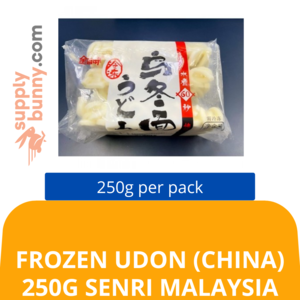
Frozen Udon (China) 250g – Japanese-Style Thick Wheat Noodles (Udon/うどん) for Malaysian HORECA
Frozen Udon (udon/うどん) is one of Japan's most beloved noodles — thick, chewy wheat-flour noodles with a smooth, silky texture and mild flavour that absorbs broths and sauces beautifully. This product is manufactured in China to Japanese specification and supplied in convenient 250g portion packs by Senri (M) Sdn Bhd, Malaysia's trusted importer of authentic Japanese specialty food products. The frozen format ensures consistent noodle quality and eliminates the labour-intensive process of fresh noodle making, making it a practical and cost-effective choice for HORECA operations.
1. What is Frozen Udon (China) 250g?
Udon (うどん) are thick, white wheat-flour noodles that are a staple of Japanese cuisine. They are made from wheat flour, water, and salt, then kneaded, rolled, and cut to a characteristic thick, round or flat shape. This product is manufactured in China using Japanese noodle-making techniques and quick-frozen to preserve texture and quality. Each 250g pack is a single or double serving, suitable for bowls, stir-fries, soups, and hot pot dishes.
2. Product Category
Frozen Japanese noodles / wheat-based noodle products. An essential staple in any Japanese restaurant or Asian food service operation.
3. Who Is This Product For?
This product is suitable for: Japanese restaurants serving udon bowls (kake udon, tempura udon, kitsune udon), ramen and noodle shops expanding their menu, hotel F&B outlets offering Japanese set meals, Asian fusion restaurants incorporating udon in creative dishes, catering companies serving Japanese-themed events, and institutional food service operations.
4. Cuisine Type and Culinary Applications
Udon is one of the most versatile noodles in Japanese cuisine. Classic dishes include: Kake Udon (かけうどん) — noodles in simple dashi broth; Tempura Udon (天ぷらうどん) — udon topped with crispy tempura; Kitsune Udon (きつねうどん) — udon with sweet fried tofu; Nabeyaki Udon (鍋焼きうどん) — udon in hot clay pot with egg, vegetables and tempura; Yaki Udon (焼きうどん) — stir-fried udon with vegetables and meat or seafood; Curry Udon (カレーうどん) — udon in Japanese curry broth; Hiyashi Udon (冷やしうどん) — chilled udon with dipping sauce (for summer menus).
5. Commercial Value for Malaysian HORECA
Udon bowls are one of the highest-margin dishes in Japanese HORECA. A 250g portion of noodles forms the base of a complete dish that can be sold for RM 12–22, with food cost well under RM 5 per serve. Malaysian diners are very familiar with and enthusiastic about udon, making it a consistent menu seller. The frozen format ensures zero waste and consistent portion control.
6. How to Use (Preparation Methods)
Do not thaw before cooking. Cook from frozen directly: Boiling method: bring a pot of water to a rolling boil, add frozen udon, cook for 2–3 minutes until noodles loosen and are heated through. Do not overcook — udon should be soft but retain a slight chew (QQ texture). Drain and rinse briefly with hot water for soup applications, or cold water for chilled applications. For Yaki Udon: add thawed or briefly blanched udon directly to a hot wok with oil, tossing with sauce and ingredients.
7. Serving Size
One 250g pack = 1 standard udon bowl serving. For light servings or children's portions, one pack can serve 2 people alongside generous toppings.
8. Yield
250g per pack with minimal cooking loss (udon absorbs liquid rather than losing weight). Effective serving yield is essentially 100% of pack weight.
9. Revenue Potential
At a selling price of RM 14–22 per udon bowl (with broth, toppings, and garnish), and a noodle cost of approximately RM 1.50–2.50 per 250g pack, operators achieve revenue multiples of 6–10x on the noodle component alone. A restaurant serving 50 udon bowls per day can generate RM 700–1,100 in daily revenue from this single menu category.
10. Margin Example
Assuming a pack cost of approximately RM 1.50–2.50 per 250g pack, and a selling price of RM 16 per bowl (including broth RM 2, toppings RM 3, noodle RM 2), total food cost is approximately RM 7 per bowl. At RM 16 selling price, GP is RM 9, representing approximately 56% GP — with potential to reach 65–70% with premium topping combinations that carry high perceived value.
11. Commercial Positioning
Position udon as a versatile, crowd-pleasing staple that supports a diverse menu without complexity. The Chinese-manufactured format offers a cost-effective price point compared to Japanese-imported frozen udon, while maintaining the characteristic thick, chewy texture Malaysian diners associate with authentic udon.
12. Outlet Benefits
- Portion control: each 250g pack = one serve, eliminating over/under-portioning
- Speed of service: cook from frozen in 2–3 minutes, ideal for high-throughput kitchens
- Zero waste: frozen format means no spoilage risk unlike fresh noodles
- Menu breadth: one SKU supports soup, stir-fry, and chilled preparations
- Customer recognition: udon is one of Malaysia's best-loved Japanese noodle dishes
13. Menu Profitability
Udon dishes consistently rank among the highest-selling items on Japanese casual dining menus in Malaysia. The low food cost relative to selling price, combined with fast preparation time, makes udon one of the most labour-efficient and profitable dishes in the Japanese HORECA toolkit.
14. Storage Instructions
Keep frozen at -18°C or below. Do not thaw and refreeze. Store in original packaging until required.
15. Shelf Life
Up to 12 months from production date at -18°C. Check packaging for specific best-before date.
16. After Opening / After Thawing
If noodles are partly thawed, cook immediately — do not refreeze. Once cooked, consume immediately for best texture. Do not hold cooked udon for more than 30 minutes before service.
17. Handling Risks
Overcooking frozen udon results in mushy texture. Monitor cooking time carefully. Cooked udon absorbs liquid quickly in soups — prepare to order rather than in advance. Cross-allergen contamination with wheat products must be declared to diners with wheat or gluten sensitivities.
18. Origin
Manufactured in China to Japanese noodle specification. China-manufactured udon is widely used across Japanese restaurant chains globally for its consistent quality and cost-effectiveness.
19. Halal Certification
Halal status requires verification directly with Senri (M) Sdn Bhd and the specific manufacturer. Udon noodles contain wheat, water, and salt — ingredients that are typically halal — but processing facility halal certification must be confirmed. Request documentation from the supplier.
20. Allergens
Contains wheat (gluten). May contain traces of other allergens depending on processing environment. Operators must declare gluten/wheat allergen to diners, particularly those with coeliac disease or wheat allergies.
21. Minimum Order Quantity (MOQ)
MOQ is subject to Senri (M) Sdn Bhd's current terms. Contact the supplier via Supplybunny.com for pack quantities per carton, pricing, and lead time.
22. Reorder Frequency
For daily udon service, weekly orders are recommended. With proper freezer storage, ordering in larger quantities to reduce per-pack cost is advisable for high-volume operators.
23. Central Kitchen Suitability
Highly suitable for central kitchen operations. Frozen udon can be stored in bulk and distributed to outlet kitchens as needed. Consistent pack size ensures predictable portioning and cost control across multiple locations.
24. Comparisons with Similar Products
China-manufactured vs. Japan-imported frozen udon: China-manufactured udon is more cost-effective while maintaining acceptable texture for everyday HORECA use. Japan-imported udon (such as Sanuki-style) commands higher quality perception but at significantly higher cost. For casual dining and set meal contexts, China-manufactured frozen udon delivers excellent value. Compared to dry udon: frozen udon is ready to serve in 2–3 minutes versus dry udon requiring longer boiling. Frozen udon also delivers a more authentic, chewy texture.
25. When to Choose Frozen Udon (China) 250g
Choose this product when operating a cost-conscious Japanese or Asian casual dining menu where consistent udon quality at affordable price is the priority. Ideal for high-volume buffet operations, lunch set menus, and institutional catering where authentic Japanese texture is desired at commercial food cost targets.
26. Alternatives Available from Senri (M) Sdn Bhd
See also: Dry Udon (for extended shelf life and different texture profile), Frozen Buckwheat Noodle (Soba), and other Japanese noodle products available in the Senri (M) Sdn Bhd catalog on Supplybunny.com.
---
Commercial Summary
Product: Frozen Udon (China) 250g (うどん)
Pack Size: 250g per pack (1 serving)
Origin: Manufactured in China (Japanese specification)
Best Used For: Kake Udon, Tempura Udon, Kitsune Udon, Nabeyaki Udon, Yaki Udon, Curry Udon
Estimated Portions per Pack: 1 standard bowl
Target Margin: 55–70% GP
Storage: -18°C frozen; cook from frozen, 2–3 minutes boiling
Halal: Verify with supplier
Key Selling Point: Fast, consistent, and cost-effective udon noodle in convenient single-serve portions — the backbone of any profitable Japanese noodle menu

Supplybunny is Malaysia's trusted HORECA wholesale ordering platform — connecting restaurants, cafes, bakeries, and hotels with verified food and beverage suppliers across Klang Valley, Johor Bahru, and Penang.
Whether you need fresh vegetables, frozen seafood, halal chicken, dairy products, bakery ingredients, or kitchen equipment — browse hundreds of wholesale suppliers, compare prices, and place orders online or via WhatsApp.
Need help or have a special request? Message Alice from Supplybunny on WhatsApp at +6014-227 6401. Our dedicated support team personally handles every enquiry — from product sourcing to custom orders, delivery tracking, and supplier coordination. No chatbots, just real human support.
Supplybunny offers competitive wholesale pricing, scheduled deliveries across West Malaysia, and a hassle-free ordering experience built for busy F&B operators. Join thousands of restaurant owners who save time and money by sourcing their supplies through Supplybunny.
What is Supplybunny?
Supplybunny is Malaysia's online wholesale ordering platform for the HORECA industry. We connect restaurants, cafes, bakeries, and hotels with verified food and beverage suppliers — making it easy to browse, compare, and order supplies online.
Which areas does Supplybunny deliver to?
We deliver across West Malaysia, including Klang Valley (KL, PJ, Shah Alam, Subang), Johor Bahru, Penang, and other major cities. Delivery areas depend on the supplier. Check each supplier's page for their delivery coverage.
How do I place an order?
You can order directly on Supplybunny.com or via WhatsApp. Simply browse suppliers, add products to your cart, and checkout. For custom orders or special requests, message Alice on WhatsApp at +6014-227 6401 — our team will source it for you.
Is there a minimum order?
Minimum order amounts vary by supplier. Each supplier's page shows their minimum order value and delivery fees upfront, so there are no surprises.
How does WhatsApp support work?
Our dedicated support team is available on WhatsApp at +6014-227 6401. Message Alice from Supplybunny for help with product enquiries, custom orders, delivery tracking, or any questions. Every message is handled personally — no chatbots.
What payment methods do you accept?
We accept online payment via credit card, debit card, and online banking through our secure payment gateway. Bank transfers are also available. All payments are in Malaysian Ringgit (MYR).

Online payment: We accept online payment via credit card, debit card, or online banking. Our payment gateway is secure and easy to use, and we accept all major credit and debit cards.
Bank transfer: You can also make payment via bank transfer. Once you have placed your order, we will provide you with our bank details, and you can make payment via online banking or ATM transfer.
Apply for 30 days credit terms: We offer a 30-day credit term option for eligible customers. If you are interested in applying for credit terms, please contact our customer service team, and we will guide you through the application process.
Please note that all payments must be made in Malaysian Ringgit (MYR) and that we do not accept cash on delivery. If you have any questions about our payment methods or need any assistance, please don't hesitate to contact us.


